The Ambiguous Colors of Nanotechnology: Kate Nichols’ nanoparticle paints have changed how she sees color

July 2015                                                                                                          Nautilus

Kate Nichols leans her delicate face against the glass of a chemical fume hood in a University of California, Berkeley lab, peering into a beaker filled with a pale yellow liquid—“like a well hydrated person’s pee,” she says, laughing. The yellow brew is a fresh batch of silver nanoparticles. Over the next week, the liquid will turn green, then turquoise, then blue as the particles morph in shape from spheroids to prisms under the influence of time and fluorescent light. Post-docs and grad students elsewhere in the nanotech lab are synthesizing nanoparticles for research on artificial photosynthesis and quantum dot digital displays. But not Nichols. She isn’t a scientist, but an artist, gripped by color.

Read more @Nautilus
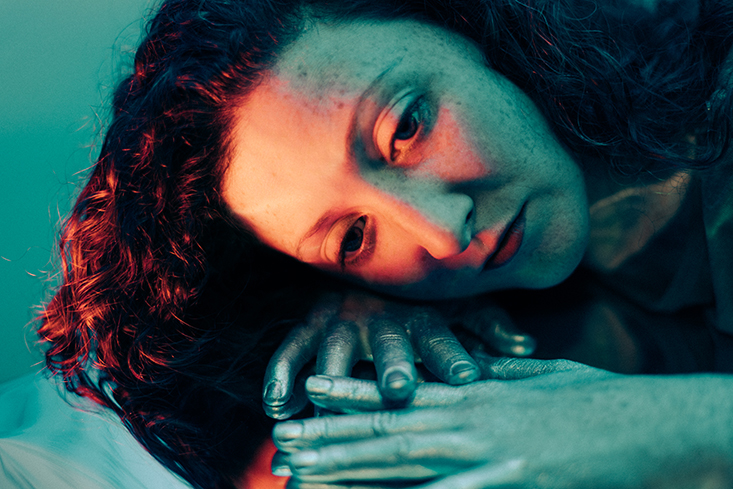
(ESSAY) “You are not just an affair”: I fell for the world’s oldest romantic cliché — being human

 July 2015                                                                                                  Salon

When my lover and I arrived at the Pont des Arts in Paris I immediately wanted to hook a lock with our initials on it to the mass of other “love locks” dangling from the railings on both sides of the bridge.
(Credit: JaysonPhotography via Shutterstock)
 I took her hand and whispered my intentions into her ear.  She turned her head slowly toward me, and I saw that she was — really? — rolling her eyes. She looked beautiful in her classic black wool coat, pulled tight around her neck against the October chill.  Her silver hair, with an impeccable French cut, fell dashingly across her face.  I loved that hair.

Now I know that the French had grown weary of the locks on the Pont des Arts.  What began as a romantic gesture by couples in the 2000s had turned into a tourist scourge weighing many tons.  Not only were the locks — quelle horreur — ugly, they were threatening to sink the bridge into the Seine.  In fact, Paris officials recently announced that they are going to cut off the whole lot of them.  Read more @Salon

Robots Can't Dance: Why the singularity is greatly exaggerated

January, 2015                                                                                                          Nautilus

Illustration by James Yang for Nautilus
Can a robot be creative? Advances in cloud robotics—machines connected to supercomputers in the cloud—have given self-driving cars, surgical robots, and other “smart” devices tremendous powers of computation. But can a robot, even one supercharged with artificial intelligence, be creative? Will a mechanical Picasso paint among us?    Read more @ Nautilus

Ingenious: Ken Goldberg -- Creative robots, the Kurzweil fallacy, and what it means to be human

January, 2015                                                                                                       Nautilus

Visit Nautilus to watch video
We are not on the verge of a “singularity,” when intelligent robots will take control. In fact, Ken Goldberg told me in this interview at his lab at UC Berkeley, his work in robotics has made him appreciate the quirks of humanness that can’t be modeled with algorithms. Smart robots and artificial intelligence systems can enhance our creative capacities, but true creativity remains a singularly human trait.  
Read more @ Nautilus

Slam Poet Bob Holman Tracks Endangered Languages in New Film

January, 2015                                                                                                KQEDArts

Bob Holman is a word man. His decades of frenetic activity in the slam poetry, hip-hop and spoken-word scenes once led Henry Louis Gates, Jr. to call him “the postmodern promoter who has done more to bring poetry to cafes and bars than anyone since Ferlinghetti.”

Bob Holman with Rupert Manmurulu in Australia. (Photo: David Grubin)
Now, Holman is pouring his love for words into a movement to save the world’s endangered languages. There are roughly 6,500 languages spoken around the world today; linguists estimate that by the end of the century, that number could be cut in half. That’s right: Some 3,000 languages could soon pass away from this sweet earth.

“Every language contains a singular way of looking at the world,” Holman tells me by email. “The brain may be infinite, but we’ve only been able to invent 6,000 of these ways of looking at things. To lose one of these is a tragedy.”   Read more @ KQEDArts

Job Fair for Bacteria at Modernism Gallery

October 23, 2014                                                                                               KQEDArts                                                                                                                                                                                       
It wasn’t clear that Mark Zuckerberg was going to show up, but Jonathon Keats was hopeful. Tuesday night was the launch of Microbial Associates, the world’s first corporate training academy for microbes.

Photo by Chrissy Hughes. Courtesy of Modernism Gallery, San Francisco."

With Silicon Valley companies struggling to add diversity to their workforce and otherwise stay competitive in the rapidly evolving global marketplace, Keats saw an opening. The industry is hungry for disruptive technologies, so why not train and certify bacteria to join the workforce and bring their skill set to the corporate environment?

After all, “2.3 billion years ago they fundamentally changed the composition of the atmosphere,” Keats, who is the founder and managing director, explained. “Oxygenation. It doesn’t get any more disruptive than that.”

This isn’t the first business that Keats has launched at Modernism Gallery. The experimental philosopher, artist and writer also created a real estate investment company offering properties in extra dimensions and a start-up that tried to genetically engineer god, among other endeavors...

 (more at KQED Arts)

(ESSAY) For Syrian Refugees, Even Jail Is Paradise

December, 2013                                                                         Al Jazeera America

“I know a woman in Izmir who has tried three times to make it to Greece by boat,” a Syrian traveler named Ammar told me.

“What happened?” I asked.
Asylum seekers in Turkey.  Ali Balli/Anadolu Agency/Getty Images


“Three times it sank, ” he replied
 
We met in the rooftop bar of the Nomade Hotel in Istanbul, enjoying the spectacular view of the domes and minarets of the Blue Mosque. I was in town with my friend Tzeli for a symposium celebrating Semiha Es, Turkey’s first female photojournalist, and we were chatting with Colleen, a woman from Philadelphia who had been traveling the world for almost two years.

 That morning Colleen told me she was heading to Athens the next day, but then she was talking about going to Geneva or the U.S. instead. Her face glowed blue from her laptop screen as she clicked through plane fares on a discount travel site. “I don’t know. Maybe I should go to the States for a bit,” she said, tapping on the keyboard. “It’s so cheap now. My dad is 84. I could see him for Christmas.” Tap, tap. “But Geneva is so great in the winter!” (more)

Dress for Evolutionary Success

April, 2013                                                                                                    Nautilus

Picture one of those ascent-of-man charts that depict a progression of profiles, from an ape walking on all fours to a slumped hominid to a modern human standing erect. What’s missing? The modern human is naked. No accessories!

Illustration by John Hendrix
 We may not find a chapter on fashion in science textbooks but ornamentation and tailoring have played feature roles in our success as a species. On the prehistoric catwalks we creamed the Neanderthal competition on both functionality and style and went on to become the dominant hominid in virtually every climate zone on earth. 

As I discovered through a host of interviews with paleontologists, anthropologists, evolutionary psychologists, and fashion historians, clothes don’t just make the man—they make us human. Clothes and body decoration evolved in a suite of human communication tools and behaviors that have shaped the runway of human evolution and culture.

Fashion has been as “crucial to the emergence of the modern human as music and dance, art and humor, and language,” says evolutionary psychologist Geoffrey Miller, an associate professor of psychology at the University of New Mexico. “It’s a legitimate part of human nature.”

That’s hardly news to the well-dressed man and woman. Still, putting fashion and science in the same sentence can seem a little strange. So, to reassure you that the pride and excitement you feel when you put on an Armani suit or a pair of Manolo Blahniks is emotionally legit, let’s turn back to our evolutionary past. The dawn of clothes reveals that we were born to strut.   (More)

Inside The Secret World of Plant Communication

April, 2013                                                                                                    Modern Farme

Photos by Sarah Illenberger
 Without plants, humans and animals could not survive, so it’s no wonder we long to communicate with them. Many past civilizations worshiped plants and have tried to converse with them through rituals and other means.  Read more @Modern Farmer


How to Grow A Cocktail

March, 2013                                                                                        Modern Farmer

What do you see when you walk into a liquor store? If you’re nature writer Amy Stewart, you see “the world’s most exotic botanical garden, the sort of strange and overgrown conservatory we only encounter in our dreams.” Indeed, without plants we wouldn’t have the martini. Or prosecco. Or single-malt scotch. Almost every element that goes into a great drink—from the fermented grains and grapes, to the herbs and fruits that flavor them, to the celery stalk in your glass—is a denizen of the plant world. Stewart’s latest book, The Drunken Botanist: The Plants That Create the World’s Great Drinks, tells the story of over 150 of these intoxicating flora and includes loads of tips for bartenders, gardeners and farmers on the art of alcohol.

 What are some weird plants that can show up in an alcoholic beverage?
You name it. If it’s a fruit or an herb, if it’s edible, someone somewhere has dropped it into some alcohol and made booze out of it. A lot of these plants go back to medieval medicine. Capillaire syrup was originally a medicinal thing made from maidenhair fern that was supposed to treat jaundice. But it became sweet botanical syrup that ended up as a cocktail ingredient. No one makes maidenhair syrup anymore. But you could. And I have.

What’s it used for?
Mostly old punch recipes like Jerry Thomas’ Regent Punch, which is one of those strange drinks that have green tea, Champagne and all kinds of crazy things.  (More)

(ESSAY) Safety Not Guaranteed

November 4, 2012                                                                          Religion Dispatches

Looking at the online flood zone map of our neighborhood, I feel calm.
  
NYC Flood Zone Evacuation Map
I’m a bit of a map freak and I appreciate how clearly this one presents the information and how easily I can navigate within it. I know, vaguely, that the East Village is vulnerable to flooding from the East River but now I can see the facts. Zooming in, I see the exact boundaries of Zone A—the mandatory evacuation zone. It extends from the river up to the public housing blocks along FDR Drive, to the German Biergarten on Avenue C, up to Sheens on Avenue B, the bodega where you can spend $8 on a carton of milk and toilet paper.

We live just to the west of Avenue B—bright red on the map, along with everything to the east. Mayor Bloomberg has ordered everyone living in the Red zone to evacuate. The storm looks big on the satellite images, really gnarly.  (more)

Today’s Vineyards, Yesterday’s Tall Oaks

 April 21, 2012                                                  New York Times/The Bay Citizen

On a recent sunny day in the Napa Valley, Robin Grossinger cupped his hands around his eyes and surveyed the landscape. He said the scene gave him “a feeling of grandeur.”

Tidal marshlands. Courtesy CA Historical Society
He was not talking about the vistas of hillsides draped in vineyards, with their gnarled vines tinged green with new growth that by fall will be laden with the valley’s renowned cabernet sauvignon and other grapes. Mr. Grossinger, a scientist with the San Francisco Estuary Institute and author of the new Napa Valley Historical Ecology Atlas, had turned his gaze onto another charismatic species: a small line of valley oak trees. 

While today’s visitors — around five million annually — come to drink wine and soak up the beauty of Napa’s viticultural landscape, past visitors came to marvel at the majestic oaks. 

The area where Mr. Grossinger was standing, near Oak Knoll in the southern end of the valley, is where travelers entering from the south first took in the beauty of the oak savannas that defined the valley floor, bursting with wildflowers in the spring. The trees at Oak Knoll supported abundant wildlife and created shade in the heat, among other benefits, prompting the California State Senate in 1858 to declare them “at once an ornament and a blessing.” (more)

Berkeley Group Digs In to Challenge of Making Sense of All That Data

April 7, 2012                                             New York Times/The Bay Citizen

It comes in “torrents” and “floods” and threatens to “engulf” everything that stands in its path.

 No, it is not a tsunami, it is Big Data, the incomprehensibly large amount of raw, often real-time data that keeps piling up faster and faster from scientific research, social media, smartphones — virtually any activity that leaves a digital trace. 

The sheer size of the pile (measured in petabytes, one million gigabytes, or even exabytes, one billion gigabytes) combined with its complexity has threatened to overwhelm just about everybody, including the scientists who specialize in wrangling it. 

“It’s easier to collect data,” said Michael Franklin, a professor of computer science at the University of California, Berkeley, “and harder to make sense of it.” (more)

Law, Order and a Life in Robes

 March 23, 2012                                                             New York Times/The Bay Citizen

As he had many times before, Judge Vaughn R. Walker — impeccably dressed in a gray suit and muted red tie — took command of the room.

It was not a courtroom, but the Verdi Club, the site of a law-and-order-themed evening of storytelling hosted by San Francisco’s Porchlight storytelling series on Monday night. 

Judge V. Walker takes the stage.  Photo by Adithya Sambamurthy
 Judge Walker, recently retired from Federal District Court, became something of a local celebrity after his 2010 ruling that Proposition 8, the voter-approved California measure that banned same-sex marriage, was unconstitutional. He became even more of a lightning rod after it was revealed that he is gay. So expectations ran high when he took the stage under yellow and purple lights and the flash of a disco ball, telling the crowd that he had been told not to expect a typical legal audience. “That, I assume, was a compliment to you,” he said. 

He quipped about how, in the courtroom, he was not used to being accompanied by a piano player, particularly “one that I know when I go on too long is going to start playing.” (more)

A Performance of Relentless Stillness, With Live Score

March 16, 2012                                                The New York Times/The Bay Citizen

Eiko, the female half of Eiko and Koma, the contemporary movement arts duo who have performed together for some 40 years, hurled her small frame onto an oblong pile of canvas and feathers on the floor of the Yerba Buena Center for the Arts.
 
“Naked, naked!” she said mischievously, gesturing to herself to indicate how she and Koma will appear in “Fragile,” a new four-hour performance with a score performed live onstage by the Kronos Quartet at the arts center through Saturday. 
Photo by Anna Lee Campbell
 The evening was an informal preview of the couple’s two-week Yerba Buena residency, which also includes performances of three iconic early works and a series of workshops and other events.
Just as quickly, Koma darted from standing to lying down on the opposite side of the nestlike pile. Then he jumped up again and ran to the other side of a large backdrop covered in feathers and salt suspended from the ceiling. 

“This is what people do who don’t want to see the naked bodies,” he said with a teasing tone, peeking back at Eiko through one of the many holes in the canvas as if he were embarrassed. 

If anything characterizes Eiko and Koma’s art, it is the slow, even glacial pace of their movements — sometimes so slow they are almost imperceptible, like ice melting. They describe their work, which evokes a deep connection with nature and deals with elemental themes like nakedness, hunger and death, as “infused with relentless stillness that subverts and transcends our everyday notions of time and space.” (More)

(ESSAY) Bob Carroll and the Art of Dying

Break Brick, Break Bread, Break the Mold

January 28, 2012              The New York Times/The Bay Citizen

Art and food mixed at a dinner last Thursday at Engine 43, a private residence and social club in San Francisco’s Excelsior neighborhood, in the form of bricks served on a bed of hay.

Using small hammers, a group of about 40 diners smashed the bricks until the clay fell away to reveal a pouch of steamed hen-of-the-wood mushrooms. The dish, intended “to spark erotic dreams,” emanated earthy smells that were enhanced by a handcrafted perfume that had been placed on each person’s wrist.

The course was only one of many served up by Max La Rivière-Hedrick and Julio César Morales as part of “The Alchemy of Dreams,” an evening-length food performance that immersed the audience in the world of Remedios Varo, the surrealist artist who died in 1963 and was known for her playfulness, wit and intense engagement with dreams, science and the occult. 

The piece was commissioned by the Frey Norris Contemporary and Modern gallery in San Francisco, where Varo’s work is on view through Feb. 25. The two artists have pulled off a handful of other special dinners, each with a different theme.  (more)

Live Hip-Hop Music, an Airport Amenity That Can Lure Even Non-Travelers

December 9, 2011         The New York Times/The Bay Citizen

Mark Braun had just landed at San Francisco International Airport after a business trip to Florida. But rather than heading directly back to his home in Burlingame, he found himself lingering. “Normally I’m ready to get out of here,” he said, standing next to his roller bag.
Photo courtesy of SFO Museum.

Like hundreds of passengers that evening, Mr. Braun stayed at the airport for an unusual reason: to be entertained.

Although the airport has an extensive program of art exhibitions — it’s the only airport in the country with an accredited museum — and presents live music during the winter holiday and summer seasons, last Friday night featured something special: a free performance by DJ Qbert, the legendary hip-hop artist and turntable master.

Dressed in a blue plaid shirt, jeans and bright red Giants cap, Qbert, or Richard Quitevis, a San Francisco native, used the mezzanine level of the grand lobby of the recently remodeled Terminal 2 as his stage. He played his signature free-form scratch over funk, hip-hop and other beats on two STR8-150 turntables with people watching behind him and in the vast hall down below.

It was “a groundbreaking event,” said Nicole Mullen, associate curator of exhibitions, who estimated the crowd at 250 to 300.  (more)


Not Like Every Other City's Bikers

August 12, 2011   The New York Times/The Bay Citizen

On any given day in the Bay Area, you’re bound to see a wild array of two-wheeled motorized vehicles whizzing around the streets.

 While the image of a rebellious Marlon Brando in his dusty leather jacket in the 1953 biker classic “The Wild One” still resonates, the Bay Area’s historically important scene is outrageously diverse — and growing more so, as electric vehicles take their place alongside idiosyncratic homemade “dirtbag” creations.

For every kind of machinery, from Vespa scooters to Harley-Davidson hogs, there is a tribe. Vintage cafe racer collectors, urban commuters, weekend dirt bikers and high-performance racers share the streets.

“San Francisco motorcycle culture is totally unique,” said Gabe Ets-Hokin, editor and owner of the free monthly newspaper CityBike.  (more)

Photo courtesy of Rebecca Hinden.

Guidelines to Gay Manners for Today

June 25, 2011 The New York Times/The Bay Citizen

As gay people and issues have become more visible on the American landscape, social etiquette has been scrambling to catch up.

People may differ on the issue of gay marriage, but who wants to argue about a seating chart for a same-sex wedding? And those pesky pronouns? How should one address those whose gender preference has not been made explicit?

Enter the brave new world of gay and lesbian etiquette. This month saw the publication of “Steven Petrow’s Complete Gay & Lesbian Manners” (Workman Publishing), a 400-page tome covering a broad range of modern issues, like coming out as transgender to your date, etiquette on sperm donation day and surviving holidays with homophobic in-laws.

When Mr. Petrow wrote “The Essential Book of Gay Manners and Etiquette” for gay men 16 years ago, online dating, “The L Word” and same-sex civil unions or marriage were not around. “It was like 1,600 years ago in gay years,” he said. “It was a different world in terms of community, technology and our legal status.” (more)